Nothing makes a handmade bag look tired faster than a strap that keeps growing. You fill the bag, lift it onto your shoulder, and a few outings later the handle hangs lower than it did on day one. If that sounds familiar, the problem is rarely your tension. It is usually the stitch.
Plain single crochet and soft, airy yarns are lovely for many projects, but they give way under weight. A crochet bag strap needs the opposite: a firm, tightly packed fabric that holds its length. That is exactly what the thermal single crochet stitch delivers. It builds a thick, almost padded band with barely any give, and once you learn the one-row repeat, you can work it without even looking.
In this tutorial, I will walk you through the thermal stitch one row at a time, share the yarn and hook choices that keep your strap from stretching, and answer the questions crocheters ask most about bag handles.
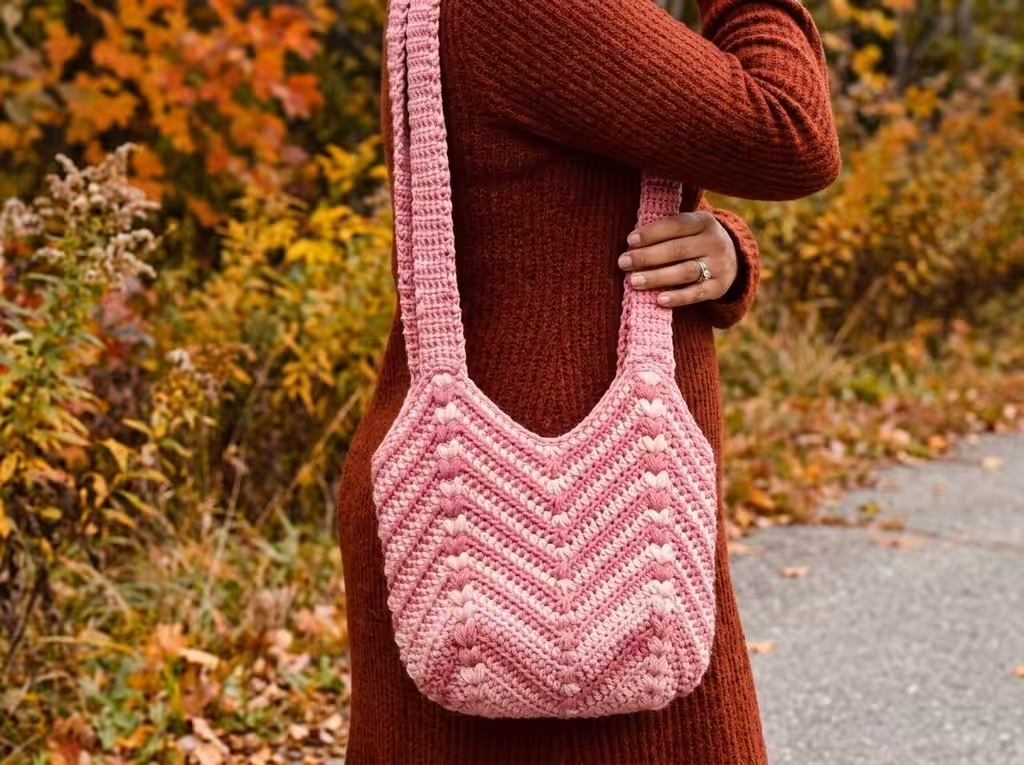
Why the Thermal Stitch Works So Well for Bag Straps
The thermal stitch is a close cousin of the humble single crochet, but with one clever twist: each stitch is anchored to the row beneath it. Here is what that means for your strap:
- Strong and long-lasting: Because you work into the back loops and tie each stitch to the row below, the fabric resists stretching. That is precisely what you want from something that carries the weight of a full bag.
- Thick and cushy: The result feels like two rows of single crochet fused into one, which gives you a dense, comfortable strap that does not dig into your shoulder.
- Simple to remember: Every row after the first two is identical. Once you have the rhythm, it is a great project to work on while watching a show.
What You Will Need
- Yarn: For a thick, sturdy strap, I recommend worsted weight (#4) yarn with two strands held together. Cotton or a cotton blend is your best friend here, since it is naturally less elastic than acrylic or wool.
- Crochet hook: A 3.5 mm (E-4) hook. Going a little smaller than the yarn label suggests keeps the fabric tight and firm.
- Notions: Scissors and a tapestry needle for weaving in ends and attaching the strap.
Thermal Stitch Crochet Bag Strap Pattern (US Terms)
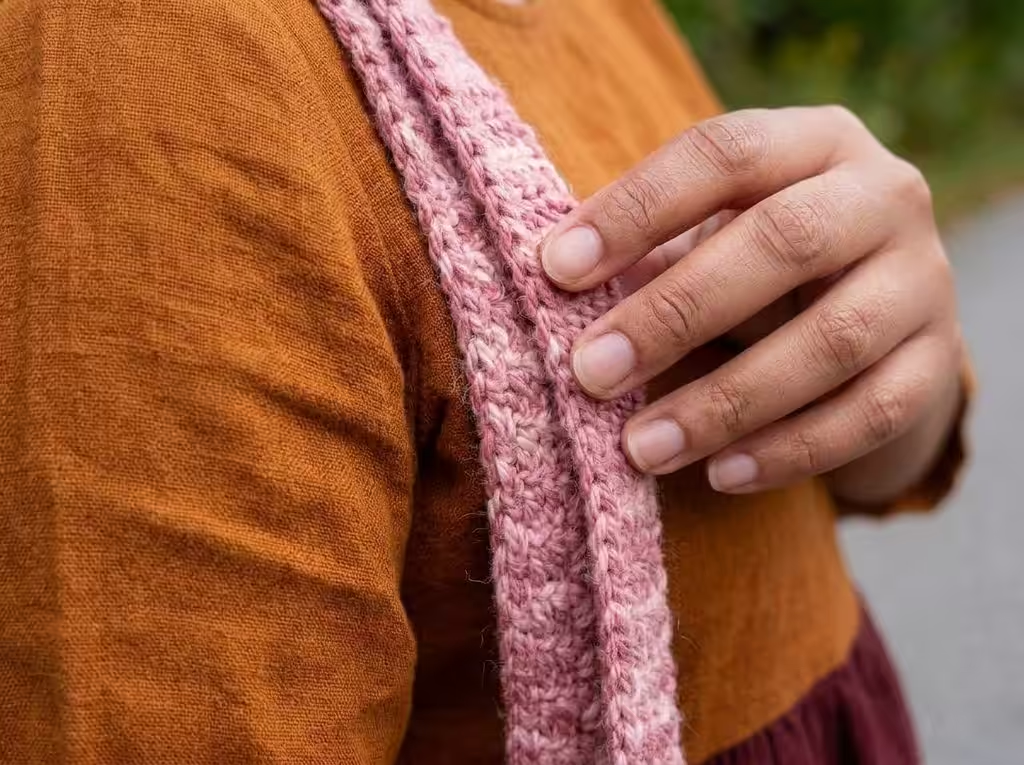
Abbreviations: ch = chain, sc = single crochet, st = stitch.
Good to know: In this tutorial, I begin with a foundation chain. If you prefer, you can also start directly along the edge of your bag and work the strap from there, which saves you from sewing it on later.
Step 1: Make the Foundation
Make a slip knot and chain 7. For a different width, chain as many as you need, then add one extra chain for turning.
Work 1 sc into the back bump of the second chain from your hook, then 1 sc into each remaining chain across (6 sc). Ch 1 and turn.
Step 2: Row 2
The second row is a simple row of single crochet, but this time you work only into the back loop of each stitch. Sc in the back loop only across, ch 1 and turn.
Tip: If the back loops feel hard to reach, loosen your tension a little. A relaxed hand makes this row much easier, and it pays off in the next one.
Step 3: Row 3 (The Thermal Row)
Now for the stitch that gives the strap its strength. Work each stitch like this:
- Insert your hook into the back loop of the next stitch in the row you are working on, and leave your hook there.
- Insert the hook again into the matching stitch directly below it, in the previous row.
- Yarn over and pull up a loop through everything on your hook.
- Yarn over and pull through two loops to finish the single crochet.
Repeat across the row. At the end, ch 1 and turn, just as you did in the earlier rows.
Step 4: Repeat Row 3
Keep repeating Row 3 until your strap reaches the length you want. As a reference point, a tote bag strap in worsted yarn (two strands held together) comes out at around 131 rows. When you are happy with the length, fasten off, leave a long tail, and use your tapestry needle to sew the strap securely to your bag.
That is all there is to it. The thermal stitch is easy to learn, and it is a reliable choice for tote handles, shoulder straps, and long crossbody straps alike.
FAQ: No-Stretch Crochet Bag Straps
Why does my crochet bag strap stretch so much?
Crochet fabric naturally has some give, and straps feel it the most because they hang under constant weight. Loose stitches, thin or springy yarn, and a lack of reinforcement all make it worse. Switching to a dense stitch like the thermal single crochet and choosing a firmer yarn will make a big difference.
What is the best stitch for a sturdy crochet bag strap?
My go-to is the thermal single crochet stitch, because it creates a thick fabric with very little stretch. Regular single crochet worked tightly is also a solid option if you want something quicker.
Do I chain 1 at the end of Row 3?
Yes. Just like in Rows 1 and 2, finish each row with 1 chain and then turn your work. This keeps your edges neat and even.
Can I make a no-stretch strap with any yarn?
You can try, but cotton and cotton blends give the best results because they are less elastic than acrylic or wool. Avoid very soft or slippery yarns if you want a firm strap.
How wide should a crochet bag strap be?
For bags that carry real weight, aim for about 1.5 to 2 inches (4 to 5 cm). Simply chain more at the start to widen the strap.
How long should a crochet bag strap be?
It depends on the style of your bag:
- Tote handles: 14 to 18 inches
- Shoulder strap: 20 to 24 inches
- Crossbody strap: 40 to 50 inches
Before you sew it on, hang a bit of weight from the strap to see how it behaves and adjust the length if needed.
Can I use this strap on other crochet bags?
Absolutely. It works beautifully on totes, purses, market bags, and crossbody bags, or anything else that needs a handle you can trust.
Save It for Later
Not ready to start your bag yet? Pin this tutorial to your favorite crochet board so you can come back to it whenever you need a strap that stays put. And if you try the thermal stitch, I would love to hear how your strap turned out in the comments!